It’s hard to know what to make of Marin Cilic’s run to the Beijing final, and his upset win over Rafael Nadal in the semi-finals.
Cilic is a tough guy to read. Whether he plays well, or not so much, he plays at a similar level of intensity. In terms of body language, there’s not much of a difference, because he seems to be one of those players that try to find themselves in ‘automatic’ mode to find their best tennis, rather than an inspired mode.
It’s not too dissimilar to Tomas Berdych’s approach to ball-striking except that Cilic is relaxed, not casual like Berdych can be. Neither of them enjoy toughing out rallies much, they prefer hitting clean and accurate shots, and that’s where Djokovic had an advantage over Cilic though I’m not sure what Cilic could have done about that since Djokovic is naturally a better mover. Cilic is a much better competitor than Berdych though, more capable of fighting through bad days because he has a much better selective memory.
When Cilic plays well, it’s like he takes all of the elements out of the equation. Rarely have I seen such a high level of tennis being made to look so simple, almost as if Cilic never even went above his comfort zone, yet looking at his shot selection, he clearly redlined his game hitting close to the lines with alarming regularity.
This match was just as much about the errors as the winners, because it was all about Cilic asserting his authority, not hitting winning shots. He opened the match with a clear game plan in mind, to shorten up the points as much as possible, so that even if he made numerous errors, he didn’t allow Nadal to feel good about himself or that he had any control over the match. It all began with the return of serve which Cilic attacked relentlessly, and from there, he was able to take control of the point and finish it off.
The way Cilic played against Nadal, it was like he got in the zone for two sets and never really looked up to see who was on the other side of the net. He knew who he was playing against, he had his set tactics but it was all about execution and that’s what he focused on, hitting his spots. I’m sure it’s just his calm demeanor by nature, but how nonchalant did Cilic look changing directions almost every couple of shots? Precise, high-risk early ball-striking made easy. This doesn’t look sustainable to me over multiple matches, too reliant on timing and we’ve seen it in his career before, his game frequently wandering off for a set or two.
He also looked comfortable exchanging backhand crosscourts to Nadal’s forehand often winning that battle, and somehow managing to generate impressive pace and angle to find winners that didn’t look like they could be created. His height surely helped with that, and Cilic takes the ball earlier than the majority of players.
Nadal looked lost, and he tried several tactics, first prolonging rallies and taking the pace off the ball, anything to get himself more in points, but Cilic rose to the challenge. Then he tried to be more aggressive but it was too late by then. Unfortunately for Nadal, his serve didn’t allow him to start off on the right foot. He seemed to struggle noticeably with Cilic’s skidding flat balls as well that bounce relatively low off the court, making it difficult for Nadal to scoop up. I really think that taller players have the greater luxury of having a bigger margin of error on flatter shots, and that really helps Cilic out.
Tuesday, October 13, 2009
Saturday, October 3, 2009
Does the ATP calendar need to support the players more?
The ATP players have long spoken about the need for a longer off-season, and it’s been one of the most widely discussed topics in the most recent years. It’s been such a cause of concern for the players that for the first time, three of the highest profile players, Roger Federer, Rafael Nadal and Novak Djokovic nominated themselves to be on the ATP Players Council in a bid to create change and make a difference.
Given the recent injury problems of Rafael Nadal and the recent announcement of Roger Federer’s withdrawal from the tournaments in Tokyo and Shanghai, it’s time to evaluate the ATP calendar again.
There are many sides of the story to this argument, and from a media perspective it’s always tempting to go with the players, given that they’re the stars of our sport. It’s obvious from their point of view that injuries are becoming more of a problem with the increasing physical demand and athleticism required of the sport.
There are many issues to consider, and the intention of this article is not to give a conclusive opinion but instead to consider each and every point available.
The 2009 ATP World Tour / ITF schedule
- Despite talks of improving the current ATP schedule, things appear to be heading in the opposite direction with increased mandatory tournaments, greater penalties for withdrawals and more travel required with the players, now with a mandatory Asian season due to the Shanghai tournament.
- Shorter breaks between Davis Cup, and the tournament preceding it, changed to a half week turnaround instead of one and a half weeks. Considering that the biggest cause of injuries is the change of surfaces, this is a controversial issue. The number of players that were sporting knee injuries during the US Open season as a result of the surface transition from clay, grass to hardcourt was alarmingly high this year, including players such as Gilles Simon, Fernando Gonzalez, Gael Monfils and Jose Acasuso.
- The off-season is equally as short as it was last year, and it’s the only opportunity for players to build up their strength and endurance, create that fitness base for the year. As much as the players have voiced their frustration, would players necessarily enjoy the greater extended period, more weeks of fitness training without a tournament in sight? It’d surely be a system that would reward the most focused and hard-working players. Up to some point, enough weeks need to be allocated to allow players to have a proper holiday but not more than that.
The players
- An overwhelming majority of players expressed their preference for back-to-back tournaments and a shorter break in between Davis Cup and the preceding tournament, so it’s not really the ATP’s fault but more so, a voting matter. Players have consistently shown that smart scheduling isn’t the highest of their priorities. Instead spending less time in a particular continent or region seems to be of greater interest.
Ideally the best schedule would be playing on-and-off tennis with alternating weeks of rest and tournament tennis, but this doesn’t suit to fit the mindset of a tennis player. They prefer to play mini-seasons of tennis, and only take the breaks that are necessary for them to survive physically. Then take into account players picking the tournaments they like, building up form for Grand Slams, appearance fees and prizemoney and somehow smart scheduling becomes lost somewhere.
- Despite the mandatory events, the ATP calendar is still essentially a pick-and-choose system, planned by players themselves. At some point, players have to take responsibility for their own scheduling. In my view, any player that doesn’t qualify for the Year-End World Tour Final should certainly be capable of creating their own longer off-season if they wished to do so.
- Lower ranked players can benefit from playing for prizemoney, or may feel reduced effects of fatigue with fewer consecutive matches at each event.
The entertainment business / the spectators
- How would you feel if the tournament from your home city was taken away? It’s a spectator sport and no player is obligated to play any particular 250 event - these types of events forms the majority of events calendar. Therefore, in theory, any number of them could exist. In my opinion, tournament attendance is the best method of attracting casual fans, people that are more interested in the occasion and spotting stars rather than the matches themselves.
- Prizemoney is driven by revenue, sponsorships and television deals so the financial side will always be the highest priority. This is basically another way of saying that the players’ concerns will always have to be less important, and revenue is driven by the participation of the top players. This explains the increasing trend towards mandatory participation.
- One could argue that money could be invested into promoting the second tier players like Fernando Verdasco and Gilles Simon, but this broad approach would likely produce less effective results, because promotion tends to need to be streamlined to a select group of players. It is also difficult to impress casual viewers and players need to back it up with great results in the Grand Slams, not to mention the addition of an eye-catching game.
Do you think the ATP calendar should be shortened – and is it more of a players’ responsibility or is the ATP largely to blame for this?
What does Andy Murray need to do to make that next step in a Grand Slam?
It would be unfair to call Andy Murray’s successful 2009 season as a sophomore slump. In a way, it’s a reference to the mindset that changes, Murray’s second successful year as a solidified top player on tour, and it can be draining mentally. Adrenaline doesn’t last forever, and every peak levels out eventually, whether due to increasing expectations or declining play.
It’s a common observation in tennis, young players finding their forms and suddenly feeling like they’re on top of the world. They’ve barely started their careers and they’re already close to the top of the rankings. It’s not like Andy Murray first started his pro career, but his meteoric rise began in the US hardcourt season last year, highlighted by a US Open final appearance.
He’s had good results in 2009, but his Grand Slam results have left a lot to be desired not living up to the results from the Masters events. Tennis is a confidence sport, and somehow staying on an even plateau can result in a lack of inspiration, the feeling of being stagnant despite all efforts to move a career forward on and off the court.
Playing well requires a certain spark, a surge of interest and energy to play attacking and athletic tennis. Big events such as Grand Slams require this in spades, as witnessed by runs from Fernando Gonzalez, Jo-Wilfried Tsonga and Robin Soderling in previous years. Murray has it inside of him in case he needs it, but he needs to believe that he needs to use it. Murray is one of those players that will use just as much as he needs, and that has been his biggest downfall.
Is it a sign of cockiness, preference or inability to read other people’s full potential? I think, it is a combination of all three. As much as Murray is a thoughtful player, he is also a reactive player often bogged down into using too many deft slices and rolled over shots to the point where he is more entertaining himself than getting the job done in the best way possible. Ultimately if he is being outplayed, he will still believe in his ability to fight through a match without feeling a drastic change is needed, like the Montreal final against Juan Martin Del Potro. It’s the type of stubbornness that can often be seen with the best players.
Considering that Murray has the ability to drastically change the patterns of play, he doesn’t often make noticeable changes within a match, usually minor at best. His style of play is more varied in between matches, from one opponent to the next. His way of being aggressive in recent times has been more like hitting a panic button, trying to hit the ball harder rather than structuring a more aggressive point, like in his Wimbledon match against Andy Roddick.
He very rarely plays a statement match these days, those matches that send out signs to the rest of the locker room, to watch out. He’s not an intimidating figure, but rather a confusing player to play against at the best of times. The best way to beat him is to not get sucked into it, keep it simple and straightforward, patient target tennis like Cilic showed at the US Open. Forget about his athleticism because he can’t hurt you if he’s too much on the defensive.
As much as taking the long way round can be a sight for sore eyes, it’s obviously silly to take the longer route when you can take the shorter one. That’s something Juan Martin Del Potro showed loud and clear in the US Open final. If you can hit a winner into the open court, then do it. I suspect the problem is that Murray has not yet fully mastered how to control his faster paced balls.
What makes the best players in the world where they are, is generally that they don’t allow their opponents to have success even on their good days. They don’t play down their level noticeably, but they still keep that margin of error. Building up an opponent’s confidence is a dangerous thing, and I always feel that Murray is on the borderline to flirting with disaster.
He needs to get it ingrained in his head that anyone is capable of having a good ball-striking day, and treat every dangerous player as if they’re capable of Rafael Nadal-like consistency. It may not be true, but who would have thought that Robin Soderling would have made the French Open final?
Tuesday, September 29, 2009
Sportingo Competition
Sportingo.com are currently holding a competition, where if you write an article between September 25 - Thursday October 1 and your article is chosen as the winning article in the tennis section (same applies for other sports), you win £50.
So far I haven't seen anyone submit any articles in the tennis section during this period, so unless if everyone writes all their articles at the last minute, I don't imagine that the participation would be exceptionally high. Anyone can write an article just by registering for free.
The word limit is between 400 to 600 words, which has always been a difficulty for me. Articles, as per normal procedure on that website are proofread and modified by the editors, and will take a while to show up.
The winning article is judged by four things: the number of views, the number of comments received, the thumbs up rating given and quality according to a panel of judges. Not my ideal way of judging definitely, so I've had to think about what topics would attract the most viewers, the most people to even open it up.
Tuesday, September 15, 2009
Juan Martin Del Potro, the 2009 US Open men's champion
It’s been a while since we’ve had a new Grand Slam champion, not since Novak Djokovic captured the Australian Open title in 2008. You’d be hard pressed to find a more impressive performance than the one that Juan Martin Del Potro displayed today against Roger Federer, in what was the Argentine’s first Grand Slam final.I have already made reference to it numerous times before, the rapid pace with which Del Potro seems to be improving, yet he still seems to find a way to amaze me just when I thought I had already handed out enough compliments his way as of late.
It was a high quality match, full of drama and unpredictability, and it was a welcome change to see a new Grand Slam champion at the end. Now that Federer has already broken all sorts of records, I think it’s a positive sign for men’s tennis to have this additional competitiveness near the top, especially if it means we’re going to get matches of this quality to look forward to in the future.
In regards to Del Potro’s performance in the final, he was impressive on so many levels, that it warrants a list of exactly why this was the case.
- Del Potro played the best match of his life in the biggest match of his career, his first Grand Slam final against Roger Federer, recently been acknowledged as the Greatest of all Time and winner of the last couple of Grand Slams. He hadn’t won a single match against Federer in the past, though I think Del Potro took a lot of confidence from their previous meeting in Roland Garros.
- It wasn’t like Del Potro came out firing on all cylinders and played lights out tennis to start with. In fact, he was made to look clumsy to start with, having to stretch his long limbs all over the court rarely getting a shot in his comfort zone. But the biggest problem seemed to me, that Federer didn’t even let Del Potro get into a rhythm, the opportunity to raise his level of play. He was thoroughly outplayed, and it could have been easy to think that he simply wasn’t in the same league as Federer, at least not at this point of his career. In his post-match interview after his semi-final win, Del Potro promised the crowd that he would fight for every point, and he delivered on this promise in a way that no one could have imagined or expected. Del Potro wasn’t deterred by the fact that he was comfortably outplayed. All he needed was a slight drop in level from Federer, and once they were back on serve, it turned into a completely different ball game. Del Potro was now feeling loose and confident and had turned the match on its head, not only on the scoreboard but he had somehow changed the match to be played in his favour, exchanging the type of rallies that he likes. Even when Del Potro started to pick up his play initially, it wasn’t like he suddenly found the range on his shots. In fact, his play was on and off, brilliant shots combined with errors as you would expect with a game as aggressive as that. But it was like he was somehow able to not associate himself with whether a shot landed in the court or not, focused on each individual shot only, trying to play the best he could. Then the more he got into this frame of mind of hitting big shots, the more consistency he developed and confidence in himself of being able to back it up.
- This ability of Del Potro’s to find a way to elevate his game when he needs it is currently what puts him in front of Andy Murray, the ability to sense when he needs to take it up a notch, that his current game isn’t good enough, and more importantly, he has the execution to back it up.Del Potro didn’t have much of a say early in the match, but he slowly started making himself known as a threat, both through his energy, on-court presence and the way he stepped up the pace on his groundstrokes. Del Potro is normally selective about which shots he decides to unload on because he doesn’t really need to red line his game, but when he removed that margin of error, the end result was quite devastating, especially his forehand which caught fire from the fourth set onwards.
- Serving to stay in the third set of the match, Del Potro served two consecutive double faults to lose the set. He vented his frustration at the changeover, and buried in his head in the towel, a look of extreme disappointment heading into the fourth set, but he didn't forget how he played himself into this position and continued in the same vein going after his shots. He came across a couple of stumbling blocks, and his level did dip inevitably having to save break points in his opening two service games, but whenever he needed it he came up with his best shots. It seems like there is no limit to Del Potro’s mental stability, no occasion that is too great to shake his extraordinary self-confidence.Then his game picked up midway from the fourth set, and that’s when he started to stamp his authority on the match, looking like the noticeably better player. He wasn’t as secure on his service games as he usually is, and he lost his serve once here, and once in the previous set as well, but he was able to let it go and continue to chase after the next game. Usually big servers hate it when they lose their service games, but it didn’t bother Del Potro, and he’s willing to accept a few errors here and there knowing that he’s playing the right way.
- Del Potro’s return of serve which started to land the sweet spot more and more as the match went on, able to knock it back quick and fast with devastating pace right back at Federer’s feet.
- Federer started to look more rattled as the match went on, trying to rush Del Potro before Del Potro could rush him, but Federer’s backhand got him into trouble with that blocked, short backswing not really doing much in terms of being able to reflect the pace coming off Del Potro’s racquet. In my mind, Del Potro’s game forced Federer into error, and into helplessness. It's pretty hard trying to execute any kind of game plan when you're up against someone hitting as hard as that.
- Does Del Potro have any sense of fear whatsoever? It seemed like regardless of the situation, whether it was recovering from disappointment, fighting to maintain a lead, saving break points, or whether he was close to victory, he maintained the same kind of racquet head speed and continued to hit almost with reckless abandon. It’s incredibly difficult to maintain the same quality of play playing that aggressively, where any drop in racquet head speed will pretty much result in an error.As impressive as Del Potro was mentally, he played with the mindset of an underdog, of someone that had nothing to lose. Djokovic and Murray to some extent have shown that it is incredibly difficult to keep up that kind of attitude and confidence. How will Del Potro change mentally when he’s expected to make the back end of tournaments, and more of the mainstream press have started to focus their attention on him?
- How determined is Del Potro that the first thing that he mentions on his victory speech after playing the match of his life is that he still has a long way to improve before he can catch up to Federer career-wise? I know it was intended to be a compliment to Federer's achievements, but it also spoke volumes about Del Potro's intentions on trying to maximise his game and that he's not yet satisfied with where he currently is.
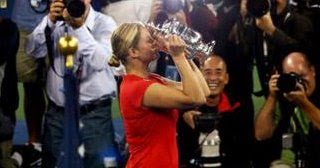
What a comeback for Kim Clijsters in this year's US Open
Some people will consider the run of Kim Clijsters as a sign of weakness in the WTA tour that it could be possible for the Belgian to come back and win a Slam after a two year hiatus. Clijsters did it the hard way too. For all the upsets and surprises of this year's US Open, Clijsters needed to defeat both Williams sisters on her way to the title. The form that she showed over the course of the week was quite superb showing very few signs of a rusty player, of a player that had been away for so long.Since Clijsters retired, the top of women's tennis has changed significantly and it's tempting to want to compare how Clijsters played here, to the other top players of today. Though I think at times it can be difficult to remember what Ivanovic, Jankovic and Safina were like even at their peak, but the combination of athleticism and controlled aggressive tennis that Clijsters showed, to me seemed more impressive than what we typically see from the previously mentioned players.
The biggest difference is that Clijsters appears to have very few noticeable weaknesses whereas I could name one thing for either one of those players and her movement is exceptional. Only time will tell as to whether Clijsters will begin to show more signs of weakness, of shots breaking down on her when things aren't going her way.
The interesting thing to me is that I never really looked at Clijsters' game with that much enthusiasm back in those days, thinking she was just as much of a one-dimensional player as most of her peers. The only thing I remembered her for was her trademark splits, which she seems to do less of these days, but given the more error-strewn nature of the WTA these days, it was simply refreshing to see someone not pull the trigger on almost every shot and hit wayward groundstrokes everywhere, yet have the ability and firepower to hang with the very best players.
Maybe over the years, the women have become even more accustomed to flattening out on their groundstrokes, because those loopier balls and occasional slices that Clijsters likes to throw in to enhance her defensive game look like shots I haven't seen much of before in the past. I like how well Clijsters gets behind every ball, always prepared so early both in her backswing and footwork, setting herself in the right position to be able to launch herself fully into the shot.
When Serena Williams played against Clijsters in that controversial semi-final, it looked like Serena didn't really know what to do, and at times tried to hit her way out of the match. Whenever she was down in a match, she felt a sudden urgency to bludgeon her way into the match with as many winners as possible. It was almost a cocky way of playing, though in all likelihood it was simply Serena not thinking straight, of thinking that by hitting harder and playing better, she could take Clijsters out of the equation just like that.
But Clijsters was in it for the long haul. She played with freedom and brought a consistent energy on the court, while remaining composed the entire evening. She was patient and had her eye on the bigger picture, which the same could not be said of Serena. It's interesting because the mood swings that were prevalent in this match from Serena, aside from the final game of the match are probably not much different from how she has handled herself in the past. Serena has always been transparent and dramatic with her emotions and on-court antics, it's her way of driving and pushing herself to do better in matches. It's that refusal to be content with her current form in any given match that allows her to raise the bar in crucial situations. She's one of the few players on the women's tour that is capable of using her emotions to her advantage, to find her best tennis when she really needs it. And Serena really needs that extra element to her game, because her effort levels and overall athleticism can vary significantly over the course of a match.
Despite Serena's renowned athleticism and foot speed, she can often be seen sluggish and her footwork nowhere near as precise as it needs to be. She doesn't naturally enjoy chasing for balls in a way that Clijsters does, and for some reason it isn't all that automatic for her. She really needs to send internal messages in her head to be tough and show that extra desire. Though I have a feeling that Serena was sending herself all the wrong messages against Clijsters. Rather than calling on her fighting abilities or looking to increase her energy levels, Serena wanted to do it the easy way. The problem was not only that she tried for too much too soon, but she couldn't sustain it. The lack of purpose in what she was trying to do really cost her. It was a fascinating spectacle though, with every shot selection and rally, a reflection of Serena's current mood, sheer unpredictability on her part as to what she might come up with next.
It was such a stark contrast seeing Clijsters on the other side of the net, so composed and patient. She never let herself get caught up too much on the scoreboard and played every point as if it was the same magnitude. She had a clear plan to lengthen the rallies, and to not give Serena too much pace to work with, or at least not the kind of pace that can be easily returned off the racquet. She used the full width of the court, and moved her shots around nicely, enough to keep Serena consistently moving.
The match-up against Caroline Wozniacki was a different matter however. The match was always in Clijsters' hands, with the outcome depending on whether she could execute her shots the way she needed to. Had this been an earlier round match, there would have been little doubt that Clijsters would have been able to. But the pressure on her was immense, easily the favourite to win the championship.
I noticed straight away that from a technical point of view, there are a lot of similarities between Clijsters and Wozniacki on the groundstrokes, how they both have that solid base that allows them to maintain some sort of consistency when setting up for their groundstrokes. They have the same consistently energetic footwork, where it seems like their feet are consistently moving all the time whether it's to recover from the previous shot, or running explosively to the next. Whereas I'd say for example, that for Serena and Venus, they probably only make that effort to make that explosive movement when they have their eye on a shot to run down, it's not consistent. Other less athletic players have had to work hard on their movement, and it's not automatic for them. You don't really see Clijsters or Wozniacki make a whole lot of errors out of poor footwork, or catching themselves in knots. If anything, it's a problem with their follow-through, backswing or racquet head acceleration.
In the end, there wasn't a whole lot to notice about this match, except that after a slow start, Clijsters got herself together enough to win the match in a convincing fashion. She easily had the better shotmaking ability out of the two, and she made the most of it. Wozniacki surprisingly has a decent all-court game, more of a willingness to come to the net than the majority of players even though technically her volleys are not all that sound. I'm not sure much can be read into Wozniacki's run into the final, aside from the fact that anything can happen in a Slam on the women's side these days, and that Wozniacki has the mental strength and consistency to take advantage of that.

Monday, September 14, 2009
Juan Martin Del Potro reaches his first Grand Slam final
It was an impressive performance from Juan Martin Del Potro to take apart Rafael Nadal like that, in three consecutive one-sided sets, yet somehow the performance itself didn’t seem overly surprising, though maybe the scoreline did. Del Potro has the ability to play consistent and aggressive tennis, a lethal combination and he can execute it time and time again as he has shown us throughout the year with his overall consistency.I think the impressive part is that it didn’t really look like he was playing out of his skin, instead it just looked like an extremely confident young man who had absolutely no doubt that he could play at this level. To some degree, it was the kind of inspired performance you usually only see at Grand Slams, progressively building up confidence over a two week period and the opportunity to seize the moment.
It didn’t go Del Potro’s way initially, and it was much more closely contested than the score suggested. The stage looked set for a long, hard battle, with Nadal trying to maneuver Del Potro around the court, and Del Potro trying to overpower Nadal, or more specifically rush him into error. Del Potro looked comfortable trading groundstrokes, making use of that effortless power of his not really going out of his comfort zone, mostly trading crosscourt blows and not really hitting that close to the lines.
The early signs for Nadal were okay. He came out with a clear idea to use the slice backhand, to not only make Del Potro bend down, but to have it breaking away from the court to open up the court for himself to take control of. At the time, the only thing that appeared to be separating the two, were the big difference in quality of serves between Nadal and Del Potro. Del Potro already has a significantly better serve than Nadal, or at least one that is far more capable of obtaining cheap points, but the gap seemed greater magnified by Nadal’s abdominal injury which meant that his serve lacked in pace.
Still it was difficult not to be amazed yet again, by Del Potro’s newfound ability to play well on the big points, where he routinely found big serves then finished it off with a groundstroke with no hesitation. Considering the relatively large backswing that Del Potro has on the forehand, it becomes particularly noticeable how much confidence plays a part in this, and he almost always maintains his racquet head speed.
Nadal had his fair share of break points, but every time he got a look in, Del Potro saved it. As much of a fighter Nadal is, it had to wear on him mentally and he didn’t have the security on his own serve, so he started to feel a sense of hopelessness. As Del Potro started to gain in confidence from the back of the court and take more risks, Nadal’s game subsequently started to look weak in comparison, not capable of making enough of an impact.
As well as Nadal can scramble, the ball shoots through the court in New York, and while he can somehow often reach Del Potro’s stinging groundstrokes with his racquet, it became a familiar sight seeing the ball bounce too low for Nadal to do anything with it often slicing it into the net.
Nadal’s returning position certainly didn’t help matters, and put him from the defensive right from the start. The interesting thing is that on these fast courts, if you move up to the ball, you really don’t need to do that much with it to get good reward from it basically by using the pace that is already there. I mean, you don’t really need to make a big effort to hit it hard if you take the ball early. Short backswing, and it will quickly make its way back to the opponent’s side.
But as hard as Nadal tried to generate pace on his own given that the ball had lost its sting by the time it reached contact point, it still didn’t end up being all that effective. Unfortunately midway into the first set, it looked like Nadal had already given up on the idea of using the slice backhand, and from then on, he didn’t seem like much of a threat anymore.
About midway into the second set, or early in the third set, Nadal didn’t really believe he could pull off the victory anymore. I suppose because Nadal’s game is so much about building up pressure and Del Potro didn’t allow him that. Del Potro played the match almost entirely on his own terms. And the bigger the lead Del Potro got, the better he played and the more risks he started to take. That’s when it gets scary because it’s almost machine-like, and that’s why it’s hard to feel any hope being on the receiving end of this barrage.
Subscribe to:
Posts (Atom)


