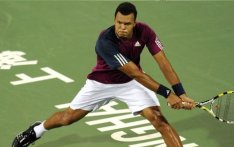
Showing posts with label Novak Djokovic. Show all posts

Monday, January 31, 2011

Andy Murray loses another Grand Slam Final, this time to Novak Djokovic

So the Australian Open is over for 2011, and Novak Djokovic has been crowned champion after defeating Andy Murray tonight 6-4 6-2 6-3.

For a couple of years, there has been a never-ending debate about who the better player is between Murray and Djokovic, and who the better player will be. Before the final, Murray had the opportunity to level the Grand Slam tally up with a win tonight, but now with Djokovic coming out on top, Murray will have an awful lot of catching up to do in this career rivalry.

He’ll have a lot of catching up, not only because of the result, but the increasing scars that have been left behind with each finals loss. Though in this match, the scars from the two Slam losses were evident enough. Murray has now failed to win a single set in three finals, raising huge question marks over his ability to play Slam finals.

He’ll need to do much better, if he wants to get over the final hurdle. Opinions of this match will probably be summarised by most people with two main points, that Murray was too passive, and also that his defeatist and negative attitude cost him the match. I find that people fall back on the overly simplistic statement of calling Murray’s play passive too often where it generally becomes the standard reason for any of his losses. This is forgetting or discrediting that he wins plenty of matches with the same kind of mindset, and has based his entire career around it, aside from a couple of wins over top players (but not all of the wins) where he has raised his level. In this case, it was a poor performance, not only a passive performance.

When Murray plays aggressively, it’s not like he hits a big shot off everything. That makes it difficult for him to hit through the nerves not to mention that he has to be playing quite confidently to be hitting his forehand well. It’s pretty hard to generate pace when you’re nervous and unsure of yourself, and as a result, his shots landed shorter than they usually do. The other point is that he doesn’t fire himself up, or play with the same intensity that Djokovic does, who has always come across to me as having the right big match mentality.

The whole first set was a nervy affair from both. Djokovic had opportunities to break in the second game of the match, then ended up losing it in a long back-and-forth game. Even though Djokovic was dictating the points, there was no clear advantage. Djokovic showed impatience in his shot selection, while Murray showed a lack of purpose and an overly reactive state of mind. The match started with a couple of awful dropshots from Djokovic, and he seemed to feel threatened by Murray’s defensive skills trying to finish points too quickly.

Both Djokovic and Murray can be quite good tactically, but I thought that tonight, it was all about handling the occasion. It was more about trying to play the next point as well as possible mentally, and finding the right energy for it, which is why this match didn’t remind me at all of any of their previous meetings. This is an area where Djokovic is a much better player. Though he also has more offensive options on the forehand, and uses his athleticism in a wider variety of ways.

There was a lot of jaw-dropping retrieving from Djokovic tonight, one of the main highlights of the match. Let’s not forget despite his acrobatic movement, it’s equally amazing the amount of feel he has once he gets to the ball. He basically put his body under all kinds of different positions and was still able to hit returns of serve, retrievals and defensive lobs close to the baseline. Whenever Murray built up a point in his advantage, Djokovic would somehow put the rally back in his favour often starting with a shot that he was barely able to reach.

As noted in his match against Federer, Djokovic has the ability to take his game up another notch to a whole new intensity and this is what won him the crucial first set. From then onwards, it was relatively one-sided, more than it should have been due to Murray spraying errors left and right. He had been wanting a racquet with a different tension the entire first set, then his game dropped a couple of levels as soon as he finally got to change it in the second set. Djokovic was now able to rally with Murray without feeling the pressure like he did in the first set. With all of the tension out of the match, this was Djokovic’s title now that he had built himself up a two sets to love lead.

The third set was more of a struggle, due to Djokovic’s groundstrokes becoming more inconsistent especially when trying to make things happen. I would put this down to nerves. Fortunately for Djokovic he could rely on his defensive skills for Plan B, and he was still able to win many points in that fashion. Murray battled through some tough games, they both did, but Djokovic was slightly the better player and there was a feeling he would play the big points better just like he had all match. Neither player managed to build on their leads in this set, and there were so many service breaks, but in the end, Djokovic proved yet again that he was the better player this match. He was the one in form, and the best player all tournament.

Friday, January 28, 2011

Novak Djokovic Outhits Roger Federer to Reach Consecutive Slam Finals

So far, the big guns hadn’t really been tested. Rafael Nadal bowed out last night, but tamely with injury, and without much of a fight. To be honest, I didn’t watch, but this Australian Open match between Novak Djokovic and Roger Federer promised good things. I had good memories about this match-up. Their US Open semi-final was by far my favourite match of last year, so there was a lot to live up to.

It felt like I wasn’t the only one with that epic match in the back of their minds. Djokovic and Federer came out with a certain respect against each other. They brought all their weapons out, their intensity, everything to the table. It was like tennis being played at a lightning speed, though it wasn’t exactly consistent to start with. It was more about sending the right message across. Federer tried to show that he’d be aggressive on return while Djokovic brought out the big forehand and they both traded blows.

I wasn’t really sure whether it was the best idea for either of them to be playing everything at such a rapid pace, since hitting it harder isn’t necessarily better and variety can be quite useful sometimes. The difference between these two hitting it harder, and other players is that their athleticism is quite spectacular. Both were so eager to take control of the points, and also perhaps wary that anything less wouldn’t be good enough. It reminds me of the post-match interview Djokovic did at the US Open last year when he was asked about what was going through his mind down match points. He replied by saying, he just tried to hit every forehand as hard as possible. That memory had obviously stuck with him, bringing out the big forehand here right from the start.

I like to watch Djokovic’s forehand because it’s such a free-swinging shot, not as restrained from precise technique and movement as most other players. Actually, his movement and athleticism is a lot like that too, and one of the main reasons why I enjoy watching him. Watching a guy slide around and stretching out wide from side-to-side is great entertainment, if it’s used with the right amount of aggression. And I really needed to include that last point to find a way to exclude Monfils out of that list. But it’s also a big advantage in a tennis sense, a strength which allows Djokovic to play with patience, and makes him more likely to win extended rallies.

The match was relatively even until the first set tie-break, where Djokovic proved himself to be the steadier player. Federer shanked too many shots, as he did during the entire match. Did he make too many errors because he tried to hit everything at a fast pace, instead of mixing it up?

Djokovic went up an early break in the second set, then Federer employed a change of tactics. I’d say he started to play a style more suited to his abilities on the backhand side, using a slower pace and hitting more slice backhands. This drew some errors from Djokovic, who had also dropped his intensity, then Federer was back on serve.

As the match was going on, the commentators had been wondering whether Federer had been feeding Djokovic too much pace. After all, there have been a couple of matches in the past where Andy Murray took apart Djokovic by feeding as many off-pace slices to his forehand as possible. I think Federer could have explored that more, or at least stuck with a clear idea.

For a while, Federer went on a tear, going from an early break down to serving for the second set, but he couldn’t serve it out. Djokovic had put him under too much pressure, and Federer was not up to the challenge today. On important points, Djokovic can play these long, intense rallies, the kind of points that have made some of his encounters with Rafael Nadal highly entertaining over the years. I don’t know how to describe it. It’s a brilliant combination of aggressive and defensive play, and Federer’s not going to win many points in these kind of rallies. Djokovic broke back, and the match started to look much like it did at the start. I don’t really know where Federer’s brief change of tactics went. But I’m not sure whether 10 minutes of it is enough evidence to suggest that it could have worked.

By the third set, the match started to play out in a way that heavily favoured Djokovic’s strengths, though the rallies were still competitive and quite good at times. Federer continued to try to drive through the backhand, and shanked too many. By the third set, he had run out of ideas and played a more reactive style, particularly not doing much on the backhand side apart from driving it back crosscourt, opening up the down-the-line for Djokovic.

Djokovic lost his break of serve at 4-3, and I wasn’t sure what happened there. It was against the overall direction of the match, but it didn’t take long for Djokovic to bounce back, and show exactly why he was leading this match. He threw in another one of those good games filled with intense baseline play, where he does just about everything he can to win a point. It’s a combination of amazing determination, eye-catching athleticism and a rush of adrenaline. Federer lost that game with errors, but it would have been awfully hard not to make one against Djokovic in this mentality. Djokovic showed his first sign of nerves serving it out making two bad errors on the surprisingly reliable forehand (for the night) but he got it together and finished it off 7-6(3) 7-5 6-4.

Sunday, January 24, 2010

Australian Open Day 6 Blog

It’s the first day of the weekend at Melbourne Park, and it shows in the crowd attendance. It’s hard to walk around anywhere, and it seems like there are big crowds wherever you go, too many people standing around doing other things than watching tennis matches because the stadiums are too full. The first couple of days of the tournament seemed fine with a greater spread of matches, but the last few days have been more problematic.

Today I decided to join the battle of trying to occupy good seats, although it was initially not my decision to do so. I had prepared to watch Mikhail Youzhny play then heard of his withdrawal so I walked into Margaret Court Arena to watch Vera Zvonareva play against Gisela Dulko.

The weather seemed continually threatening but in the end, it was simply a minor nuisance. What was probably more of a nuisance was the quality of the matches. By the end of the day, I felt like I just watched a first round day of coverage on TV where they pick the top players beating a poor hapless opponent for three tedious sets. For the first time, I left the grounds in the afternoon at 4:30pm, that’s how one-sided the matches were.

The match between Zvonareva and Dulko was fascinating to watch, just because it was refreshingly different to the other women’s matches I watched. Everything seemed at a pace slower, reminiscent of what 90s women’s tennis looked like, and at first this was exciting. This was tennis that was easy to watch, filled with rallies where players cared much more about accuracy than power.

Zvonareva can hit the ball significantly harder than Dulko, but at the same time it was obvious that she could hit it much harder if she wanted to. Instead, she chose to hit the ball side-to-side most of the time at about a medium pace.

In the first ten minutes or so, I found Dulko incredibly fascinating to watch. The way she hits the ball, she finesses it, she doesn’t drive through it. As a result, Zvonareva dominated the majority of points, and I thought it was an incredibly difficult way of playing because if she doesn’t find perfect accuracy then her shots end up being punished. Given Dulko’s stature, I am not sure why she can’t generate any more pace or whether she just chooses to play like this.

Dulko started poorly struggling with her serve and making far too many simple errors. But whenever they engaged in a rally, Zvonareva seemed to have the upper hand quite clearly, which made it difficult to shake off this preconceived feeling in the second set when things started to become more even.

I constantly wondered what it would look like, Dulko playing on a good day. She seemed too much of a crafty player to be overly reliant on her opponent’s errors. In the second set, I found out the answer to my question. She still swings at the ball just as timidly, and she doesn’t seem to find much racquet head speed at all. She finds that extra pace mostly through better timing. And with better timing came better depth and accuracy, and she ended up putting Zvonareva on the move more often than it would initially seem possible.

Still Zvonareva’s groundstrokes seemed too good overall, and it was more a case of her managing her own game. It was far more difficult for the Russian in the second set, but in the end she prevailed.


I hadn’t seen Nikolay Davydenko play yet this week, so it was my final opportunity to do so. He was scheduled to play against Juan Monaco, in what would end up being a one-sided victory for Davydenko.

From first glance, Davydenko has one of the more eye-catching games on the tour. I’m not sure why he has a reputation of not standing out when he clearly does. Compared to the majority of other players, Davydenko has an incredibly efficient game, and everything he does is so neat and perfect.

He has shorter backswings than the majority of players, and he takes everything so early that it looks like he’s catching it while the ball is still high. Every time he hits a backhand, it looks like a high backhand. I can see why they call him a ball machine, in a different sense. Because he manages to prepare early enough to be able to hit every shot almost exactly the same way, and this looks ridiculously good. Surely it has to be tiring to be so quick and early to every single shot. Everything he does, he does at a fast pace, whereas the majority of players are more selective.

When I watch Davydenko on TV, I usually focus most of my attention on the accuracy of his groundstrokes and his relentless aggression. But I found myself mostly looking at the technique and movement that Davydenko has on his groundstrokes. It’s hypnotising in a way, though I thought maybe I should actually take a step back and focus more on the tennis. I also think that his backhand looks so much better than his forehand live, whereas I normally think of them as being more even. And how about Davydenko's service motion where he seems to lean his back in a perfectly straight slanted motion?

Monaco doesn’t appear to be doing anything remotely interesting. Basically, Davydenko is playing at a fast pace and Monaco is playing at a medium pace, and being far less adventurous. His low winner count says it all. In the first set, he was making the simplest of errors, but in the second and third sets, he picked up his consistency.

The first set was Davydenko playing close to his best tennis, but his game dropped off to something more mediocre for his standards in the second and third sets, at least in the part that I watched. The match was a demonstration to me of both, why I like Davydenko play, but also why I don’t. As soon as his game dropped off, the funny thing was that his shots and movement still looked almost exactly the same. Except that it was less admirable given that he was making far more errors. I guess that’s because he relies so much on timing.

I wonder if Davydenko only reserves his all-court game for the higher ranked players, when he thinks he needs it, because he mostly stuck to the baseline and didn’t hit that many volleys.


Before the match ended, I decided to take off and watch Novak Djokovic’s match against Denis Istomin. As I sat down to watch this match, I started to gain a new appreciation of Davydenko’s match against Monaco, due to its one-sidedness. At least Monaco managed to extend many of the rallies, though it also put into perspective that even though Davydenko plays very aggressively, he doesn’t finish points in a couple of strokes that often.

It seems like the rest of the crowd were restless and bored as well, with someone behind commenting me that this was like watching an exhibition. It was a seriously underwhelming day all around, not only with the matches I watched but also with Koubek’s retirement against Verdasco, and one-sided victories for Azarenka and Serena Williams.

Djokovic had already won the first set 6-1 when I started watching it, and he seems incredibly relaxed. How can I judge a performance like this, with no pressure? Djokovic’s stroke production is so different from Davydenko’s by the way, so much looser and less precise especially on the forehand.

He seemed very keen on coming to the net today, maybe experimenting with his game, I’m not sure. And he hit more slice backhands than I can normally remember. He had a lot of success with it, and Istomin struggled with it all match long. The rallies and the pace of this match was so quick that sometimes it was difficult to see what Istomin was doing wrong, aside from being a weak, inconsistent player all-round. His defensive skills were particularly poor as he would often drop balls short anytime he had stretched out wide, and quickly Djokovic was able to dominate points easily.

Djokovic was up 5-0 in the third set, but had a slight concentration lapse towards the end. He tried to hit a shot behind his back to entertain the crowd but failed miserably in its execution. In the end, he served it out on second attempt, and that was the end of the horror of the day session.


I came back for the night session between Lleyton Hewitt and Marcos Baghdatis hoping to watch a closely competitive match played in a emotionally charged atmosphere. After some early excitement with Hewitt gaining an early lead, it became obvious early that something was wrong with Baghdatis. Though I was not sure whether it was fatigue, or something more permanent.

He couldn’t seem to generate any racquet head speed on any of his shots, and I was wondering whether he had a slight problem with this in his match against Ferrer because the pace of shot did noticeably decrease towards the end.

It was the first time I experienced sitting near the Aussie supporters dressed in the yellow shirts, and the support group was nowhere near as big as I thought they would be. Where are the Fanatics? In any case, I really liked the variety and creativity of their chants, compared to the majority of support groups that generally chant the same thing over and over again.

The atmosphere died down quickly, when everyone realized that Baghdatis was struggling badly. It hadn’t been a satisfying day of tennis, and this match unfortunately didn’t live up to hopes of making up for the rest of the day’s tennis.


I walked over to Hisense Arena hoping that maybe this would be the match to do that, between Tommy Haas and Jo-Wilfried Tsonga, and fortunately it was an entertaining affair. Surprisingly the atmosphere in here was much more electric than it was in Rod Laver Arena, and later, it was easy to see why with the quality of play the fans were witnessing.

This was an entertaining display of all-court tennis from both players, and I loved the fast pace of the match, with both players barely taking much of a break in between points. This was a battle between Tsonga’s forehand and Haas’ backhand to see which shot would be more dominating.

Everything about Haas’ game is so clean and aesthetically pleasing. Haas’ backhand down-the-line is great to watch, and so are his dropshots though he overplayed it at times. I was looking at his shot selection, and he seemed very focused on playing beautiful tennis. I am not sure if this is a good thing.

Haas is a clean hitter of the ball, and he doesn’t seem to have much weight on his shots compared to a lot of the other players, especially on the forehand. Whenever he missed shots, he’d usually miss them by overhitting, often hitting it too long or trying to be accurate. I am not sure how much his defensive game was affected by the back injury that he had, where he called the trainer for at the end of the second set.

Tsonga was more explosive on the court and he had more power on his groundstrokes than Haas did. His serving was especially good, while the rest of his play was more up and down. The match was so fast paced though, that if ever there was a bad error in a point, it was easy to move onto the next point. Haas served for the fourth set, but Tsonga suddenly raised his game to a new level, making more of an effort to turn everything into a forehand and bludgeon his way into the match.

After spending so much time previously looking at Haas’ backhand and all-court game, it was like Tsonga suddenly made his presence loud and clear, raising the level of his shotmaking and athleticism, and hitting more spectacular forehands to take the match in four sets.

Thursday, November 12, 2009

The strengths and weaknesses of the ATP top 10

This is the article I wrote for Sportingo in an attempt to win the £50 prize, but was unfortunately unsuccessful.

Roger Federer
Known for having one of the most complete, all-round games, Federer has the unique knack of being able to combine sheer pace with finesse. The best shotmaker in the game, capable of winning matches with the most dazzling display of winners.

Defensively he is very light on his feet and has excellent reflexes which allows him to half-volley shots on the defensive, to be able to quickly turn defense into offense.

His forehand is a creative shot which allows him to create bigger openings than most other players can, due to his superior racquet control and improvisation skills. His backhand is a solid shot, but his backhand slice especially short in the court is the great strength, for putting opponents in uncomfortable positions and making it difficult for them to take complete control of rallies.

Federer can be prone to shanking balls because of his quick racquet head speed, though he does this surprisingly rarely as his strong record over the years shows. He is most prone to succumbing to the players that are most difficult to break down, such as Nadal, Murray and Djokovic, that force him into long, competitive rallies.

Rafael Nadal
One of the great competitors of the game, Nadal is famous for his intense approach to the game, and attention-to-detail. Undoubtedly one of his biggest strengths is his willingness to improve his game, his gradual transition to becoming more of a shotmaker and more adaptable to all surfaces.

Nadal's game revolves around his forehand, similar to Federer's, how he can force his opponent to cover large amounts of court with the angles he can create on it due to the topspin.

Nadal never succumbs to impatience, and is an expert at pounding at his opponent’s weakness relentlessly, particularly if that weakness is a right-hander’s backhand. He has a knack of hitting superb passing shots on the run. His backhand crosscourt is an improving shot and he can generate impressive pace on it, usually to his opponent’s surprise. Fitness-wise, he can outlast anyone in the game, which can make it a painful experience for his opponents trying to compete with him.

The best chance for opponents to attack him is through his second serve, which has the tendency to land short on occasions. His forehand defensively can also be a problem on hardcourts, because of his big swings which may force him to catch it late. Nadal’s confidence levels tend to fluctuate over the course of the season, which can make him beatable by the very best players or players playing well on their day.

Novak Djokovic
Djokovic is one of the most complete baseliners in the game. He made a name for himself in 2008 with his superb down-the-line shots and impressive athletic ability, the extra effort he puts in to ensure a deep, effective defensive shot on the full stretch. These days, he possesses a relatively complete baseline game, difficult to outrally or break down. He is capable of grinding out matches when he isn’t playing his best tennis, and his backhand is a technically sound shot.

His second serve is becoming more of a liability these days landing shorter than it used to, and his forehand is not an efficient enough shot which can lead to having its bad days. His forehand seems to struggle particularly when not given pace or height to work with. Djokovic has a tendency of turning difficult matches into dramatic spectacles, which can be his own undoing in bad matches.

Andy Murray
Known for his unique, crafty approach to the game, Murray is one of the few players that utilise the full area of the court, famous for finding his way around his opponents rather than through them. Most of this is through to the creative slice backhand he possesses, inside-out curving outwards or short angled wide, and he is also capable of creating short angles on the forehand side.

His game is a strange combination of low-paced and fast-paced shots, taking his opponents by surprise more often than not. Like Nadal, he has an excellent ability of hitting superb shots on the run, and he has great passing shots. His backhand is his biggest strength, and almost never breaks down. He is extremely consistent and loves long rallies.

Murray is capable of finishing points off at the net, but often prefers not to, moving his opponents around instead. In today’s stronger and more powerful generation, Murray’s lack of power on typical shots can prove to be a problem if not executed perfectly. He can also be overly conservative on return of serve, which works against him on some occasions. His second serve and first serve percentage has also been commonly mentioned as a weakness.

Juan Martin Del Potro
The reason for Del Potro’s success is his lethal combination of power and consistency, the ability to maintain long rallies while remaining aggressive and in control of rallies. He’s accurate, but doesn’t need to hit close to the lines because he’s so powerful. Backed up by a strong serve, Del Potro excels at the simple quick shot combos to kill off short balls, and any weaknesses thrown by his opponents.

He shows good point construction, and is able to sense when he needs to play more aggressively to turn around a match. He’s mentally strong, and becoming increasingly difficult to break down.

His weakness is his foot speed, and his ability to change from defense to offense is not as good as the players ranked above him. He operates best when given a rhythm to work with, and he doesn’t like bending down too often. He is excellent at covering up his weaknesses however, and he doesn’t often relinquish a point he has under his control.

Andy Roddick
The man with the fastest serve in men’s tennis history, Roddick is difficult to break because of his strong first serve percentages and variation on serve – a mixture of pace, kick and slice. The rest of his game is solid and smart, varied enough to make it difficult for his opponents to attack his obvious weakness on the backhand. His strength over the course of his career has been his adventurous approach to his game, the willingness to tinker with various aspects of his game to keep it fresh and relevant.

Roddick can be outrallied by strong baseliners, so it’s always a battle for him to break out of other players’ patterns of play. His backhand, especially as a passing shot is the great weakness as it showed against Isner in the US Open. If serving well and playing confidently, Roddick can be a threat to many players, but the difference between him and the players ranked above him is that he can also lose to moderately ranked players more often, though he rarely loses to low ranked players.

Nikolay Davydenko
For better or worse, Davydenko has a one-size-fits-all approach to the game. Aggressive, early ball-striking based on the idea that if you attack your opponent first, they can’t attack you. Thankfully he is a superb ball-striker and has a great combination of foot speed and footwork.

He can create excellent angles, and is one of the best at changing directions. The key to breaking down Davydenko’s game is to generally throw him out of his rhythm, though it can be a difficult task, but on some days, Davydenko has the capabilities to break down his own game with a rash of errors. Another weakness is that Davydenko doesn’t really possess a change of pace. Fortunately Davydenko is a shot-focused player and will rarely be bothered about his own errors, hopeful that his game might come together quickly.

Fernando Verdasco
Verdasco always had the weapons to become a top player, but didn’t know how to harness those strengths. His strength is clearly his forehand, which he can use to control proceedings, and because of the spin he generates on the ball, he is capable of hitting forceful shots without hitting anywhere near full pace, though he can flatten it out also.

The variety on his forehand is excellent, and tactically he is improving, especially in terms of killing off points under his control, realizing that it doesn’t need to be done in one shot. Given the explosive nature of his forehand, he has a tendency to try to win matches cheaply with his forehand, especially pulling the trigger on the high-risk high-reward forehand down-the-line too much. He has an excellent sliding serve especially on the backhand court, and often serves high first serve percentages.

By tactically playing better, he has removed some of the flashy shotmaking that made him dangerous. His return of serve is solid and consistent, but not that great offensively. He doesn’t utilise an all-court game as much as he should, and sometimes he can be lacking in fire and motivation in matches, though that has also improved.

Jo-Wilfried Tsonga
Tsonga is one of the best short point players in the game at the moment, which allows him to maintain good consistency despite not being as solid of a player as many of his peers. He can create so much damage with the one shot, due to his big forehand as well as his follow-up ability at the net. He has a great transition game, because of his impressive athleticism. Because of his attacking style of play, he is capable of covering his weakness on the backhand, difficult to drag into long rallies.

The weakness for Tsonga is that he doesn’t seem completely sure of what style of play he wants to play, and sometimes doesn’t commit fully to being aggressive, and putting pressure on his opponents. He can also rely too much on his shotmaking, and doesn’t yet know how to grind out matches. His return of serve can be a weakness, especially against better servers.

Robin Soderling
Soderling has been a surprisingly consistent player after his breakthrough run at the French Open, despite not having the characteristics that would suggest he would be one. His game is strongly based on a powerful serve, and he backs it up with a big forehand and solid backhand. Pace of shot and shotmaking are Soderling’s greatest strengths. He can overpower most of his opponents, and has the ability to string together a great return game to break serve.

He's likely the most one-dimensional player in the top 10, not really capable of much subtlety and he can appear to be lunging around the court when moving. The movement to his forehand out wide can be exploited, especially if he has to bend down low, and he has problems moving forward as well. With Soderling, it’s very much a case of sticking to his strengths and he has shown good form and confidence recently which is the key to his success. He is also stronger mentally than he used to be, thanks to the help of his current coach Magnus Norman.

Sunday, November 8, 2009

Novak Djokovic mentally breaks down Radek Stepanek


For almost the bulk of the first two sets, Radek Stepanek had Novak Djokovic right where he wanted him, 0-40, three match points to reach the Basel finals. Three mediocre points later, and Stepanek’s window of opportunity was gone. When Stepanek gets tense, everything slows down and he can’t hit anything with pace, or volley with any conviction. That’s the downside of having such flat strokes, you can’t really overexaggerate your groundstrokes and still find decent racquet head speed by adding topspin.

It’s a shame that Stepanek’s game fell off track so rapidly in the third set, because he was playing some extremely smart attacking tennis. Indoor surfaces are great for his game, because taking the ball earlier on the rise, that slight split second difference can make the biggest difference between hitting a defensive shot compared to an approach shot or change of pace/direction, one of his key strengths. He’s so dangerous because you can’t just pin him back and drag him into a drawn-out baseline rally. Then he’s quick to move in on the kill, and finish it off at the net. The way he bounces up and down in between points, it’s as if he’s incredibly light on his feet and it shows when he stretches and lunges around the net with ease.

First game of the match, and Stepanek’s game plan was clear from the beginning. Set up the point with the return of serve, and construct the point from there. He had a couple of break points to start with on Djokovic’s serve, but Djokovic saved them, and it stayed on serve after that. Stepanek was solid on serve, very high first percentage which allowed him to serve-and-volley effectively.

It was even for the most part but the match was played on Stepanek’s terms, that extra piece of inspiration being the key to the slight lead that he built for himself over the course of the two sets. Stepanek is purely a timing player, he relies a lot on it and it’s amazing how well he’s able to change directions on what look like relatively high risk shots. He has a lot of feel for what to do with the ball, and he is excellent at improvising and reading the play.

He doesn’t really play to the score much until things get tight. It’s more like he will have his mind switched on, with the idea of attacking whenever possible but to have the patience to wait for the opportunity to do so. To not do too much on the deep balls, which Djokovic is so good at hitting. He will usually make a fair amount of silly errors but it won’t bother him knowing that he’s playing the right way, as long as he’s not piling up on errors. He’s not one of those players that needs to be consistent to feel good about his game – he feels good about his game by sneaking around all over the court. The more he gets to move and use the whole court, the more fun he’s having.

Djokovic looked mechanical in comparison, simply trying to make every rally into a long baseline rally and attack when he had a clear opening. He didn’t play with intent, and it was as if his mind was on autopilot. I had a feeling that he somehow managed to uninspire himself with that tactic though, having several concentration lapses throughout the match. At least it was clear that Djokovic didn’t mind the hard work, and that mentally he didn’t give away much to Stepanek. I wonder if Todd Martin has been giving him advice to stop with those negative gestures and body language. I also wanted to take a look at Djokovic’s net game, but it’s hard to implement much when you’re playing against an opponent that is often going to make his way up there first.

There wasn’t really all that much of the trademark change of directions that we normally see from Djokovic. When he did it, he did it with care, not as a surprise tactic but more to spread the court. The difference was obvious late in the second set when Djokovic ripped a couple of backhand down-the-line winners, then put his hands in the air as if to say it was the first time he managed to hit that shot the whole match.

Once Stepanek lost his chance to take the match on his three match points, the match reached an anti-climax. Stepanek couldn’t do anything right – dumped volleys tamely into the net and no energy into anything. Now he walks around slowly in between points instead of being his usual bouncy self. When he hits a great shot, it doesn’t mean anything to him and he can’t find ways to appreciate it anymore. His serve was the biggest declining factor, both in terms of pace and percentage and that made him a relatively easy target for Djokovic. He had already mentally checked out for a long time, but the match point summed it all up, with Stepanek tamely attempting a dropshot to put him out of his misery, one that he never felt he had any hope of making.

Wednesday, September 2, 2009

US Open Day 2 Round-up: Gonzalez wins battle of Chileans, Djokovic makes short work of Ljubicic

Fernando Gonzalez def. Nicolas Massu

Gonzalez and Massu know each other well, and this match had an interesting dynamic. It was almost like a quiet determination because they both respect each other. Sometimes I see Massu put in some shocking performances, but this one should probably be considered good in comparison. It was an entertaining match, the contrast of Gonzalez's showmanship and Massu's fighting spirit.

Massu did everything right execution-wise and in terms of effort, it's just that he doesn't have the extra spark that Gonzalez naturally does, the explosiveness in shotmaking. He went after his shots, hit bigger than he normally would and used his forehand the best way he could instead of grinding it out. Gonzalez hit some spectacular shots, unpredictable shots, but Massu was unfazed by all of it and I guess the familiarity of having known Gonzalez for such a long time would have helped with that.

Gonzalez's performance was almost like a direct contrast to Verdasco's earlier in the day. Gonzalez is a moody and unpredictable player, which is the only way I can explain his random shot selections, when he decides to pull the trigger and when he chooses to dig them out instead. And lately, he has been particularly moody, so I think this was almost a demonstration of playing tennis that interests him, an uncompromising approach. It's not like he hit every ball as hard as he could, he played with more flair than that. At one point, he returned with a serve with one of those chopped sidespin shots that you see in a junior social tennis game.

Gonzalez wasn't completely focused on the job but he was hungry for the win, you could see on the basis on the urgency of his movement. Sometimes he'd throw away return games, and he'd throw in numerous cheap errors, but he hit enough spectacular shots to think that at some point he'd get that break of serve he wanted. It's hard to play against someone that doesn't really show any patterns of play and lashes out at the ball as often as that. It's almost like everything is dictated by whatever he decides to do and nothing else, and soon enough you'll end up constantly looking over the other side trying to figure out what he's thinking, but the next minute Gonzalez might be thinking and feeling something else.

Gonzalez mentally checked out for a while in the last couple of games in the third set, but managed to pull himself together just enough to serve it out the third time after finding himself down break points yet again.

Novak Djokovic def. Ivan Ljubicic

Djokovic came out hitting the ball more cleanly than I'd seen from him in a while in an early round match. The sound of his ball-striking sounded great, though I can't tell whether it's just that the sound effects of my TV are merely better than they were in Cincinnati. But I think Djokovic looked confident to begin with, while the opposite must be said for Ljubicic. Djokovic's movement and intensity looked great, and he had no problem using his long levers and dynamic movement to return Ljubicic's serve with ease. Rarely would Djokovic reduce himself to a one-handed return on the backhand.

This looked like a potential banana skin for Djokovic, but for me when I looked at this match-up, Ljubicic has never really had any success against Djokovic recently. He had no belief in himself, and didn't really know what he was doing on court. There was no energy about him, which is what it typically looks like when Ljubicic is in a slump. He was literally walking around the court, and whenever he seemed to temporarily pick up the energy of his footwork enough, all Djokovic had to do was feed him more balls and eventually a sluggish error would come his way. I must say it was impressive that Djokovic only hit two unforced errors in the opening two sets. The match had an air of inevitability about it, so I skipped past it after the second set reached its completion.

Saturday, August 22, 2009

What is going on in Novak Djokovic's head?

Video Clips: First set | Second set

What would Novak Djokovic's game look like if somehow all of the pressure was relieved from his shoulders? I've been closely observing Djokovic's body language lately, in particular in his third round against Jeremy Chardy, and to me, it looks like much of the tennis that Djokovic has been showing has a lot to do with nervous tension. The kind of nervous tension that doesn't allow you to swing at the ball freely, to take a big cut at the ball without thinking about whether it will make its target or not. And Djokovic does take big cuts at the ball, especially on the forehand. It could just as much be interpreted as lack of confidence, and that's part of the story as well.

Watching how Djokovic reacts to his own shots, it looks like he's consistently irritated at himself, setting overly high standards for himself. Perhaps he needs to take a step back and think more about how he wants to play the match, rather than the outcome or result of the match. To somehow find a relaxed state of mind so he can rediscover the free swinging nature that he used to have on his forehand.

Against Chardy, Djokovic's groundstrokes looked inhibited and mechanical, lacking in pace particularly on the forehand side. At least on the backhand side, he can still use his left wrist for that extra sense of control, and he does have good feel on that side. It was a very deliberate way of playing, hitting controlled loopy shots trying to guide the ball to where he wanted them to land. Yet he still couldn't really string together his shots that well, that's what a lack of confidence does. He won't be winning any big matches playing like this, but it could be a completely different situation if he takes the mindset of being the underdog.

This match was a test of Djokovic's patience because he was clearly playing the better tennis of the two, yet it wasn't showing on the scoreboard because of his inability to play the bigger points. Watching the match, I really didn't know how Djokovic hadn't yet managed to score a break in the first set, when Chardy must have gifted him about three free points in each of his first three service games.

Chardy is one of the more inconsistent players on the tour, although he does have weapons to make up for it, particularly on the serve and forehand. Generally if Chardy serves well, he plays well. That's the barometer of his game, because then that takes the pressure off the rest of his game, and he can afford to make a couple of mistakes here and there. His serve wasn't working great here, but it was working well enough to dig himself out of holes, and to hang in his own service games.

Chardy's game reminds me of a less effective version of Jo-Wilfried Tsonga's. Like Tsonga, Chardy looks like a completely different player when he leans in on his shots and looks to move forward into his shots. He likes to control the centre of the court and he's quick to step in and take the ball on the rise, which is particularly useful given the extreme grip he has on his forehand to make it easier for himself. He covers the court with long strides, and he has a large wingspan which makes him an intimidating presence at the net if he chooses to make it up there.

Out of all the players, Chardy probably has some of the most unorthodox techniques in the game, so inevitably there's a big chance of his game breaking down. His forehand is both his big weapon and his achilles heel at the same time. He uses a big backswing, and he basically takes a swipe at the ball in a similar way that Robin Soderling does except that he uses a far more side-on stance than Soderling. It's the opposite of having a fluid stroke and it must be particularly difficult trying to manage when there are so many things going on at the same time.

His forehand is an attacking shot, there's not much of a happy medium. It's a flat stroke, with not much topspin particularly under pressure. I find that he gets more height over the net and better topspin when he's energetic and launching into the shot almost like he's jumping on it, but that doesn't seem to happen when he's tight. He's one of those players that need to play aggressive tennis to do well, and that makes his decision-making a whole lot easier. He doesn't really have a whole lot of attacking options on the backhand, so essentially he puts a lot of pressure on his forehand to do most of the work in his matches.

The forehand doesn't need to function consistently. It just needs to hold up and his main aim is to hope that he can string together some big shots on one of his returning games, most likely with the aid of some second serves because he doesn't return big serves that well. I thought Chardy should have returned Robredo's serve better than he did in their second round match, missing far too many returns not even putting himself in a position to play another shot. I think if Chardy is going to take his game to the next level, he needs to develop more of a complete, all-court game rather than relying as much on his forehand as he currently does.

Chardy's serve is an interestingly produced shot as well, often struggling with the ball toss, sometimes throwing it too far to the right. His serve is based around a big shoulder and hip rotation to the point where I think it would be easy for him to lose track of where the ball is once he has to hit it. He hit a couple of double faults in this match, mostly with bad ball tosses, or at least in a way that doesn't synchronise with how he set up to hit the stroke. When it works, he generates good pace and the slice serve out wide on the deuce court works out great breaking out wide away from the opponent.

In the end, the match seemed relatively simple. Chardy was able to control the points off the back of his own serve, but didn't have much of a look into Djokovic's. What Chardy needed to hope for was Djokovic to play a sloppy error-strewn game, which he finally did midway in the second set. This was when Djokovic was at his most vulnerable, at boiling point after smashing a racquet at the loss of the service game. Just when Chardy needed to capitalise on that with a strong passage of play, Chardy's game went to pieces returning the favour with an equally error-strewn service game.

Sunday, May 3, 2009

It's a familiar sight: Federer shows signs of weakness, Djokovic faces Nadal again in a final

Novak Djokovic, into his second straight Masters finalA few weeks back before the start of Monte Carlo, both Roger Federer and Novak Djokovic were known to be having some sort of mini-slump. It's a mini-slump because consistently making quarter-finals and semi-finals of bigger events suggests that things could be worse than they currently are. But what could be associated with the tennis from Federer and Djokovic was that it was a bit rough around the edges, their games not looking as neat and tidy as it used to look, and more patchy in general.

But since then, things have changed for the better for Djokovic, as he finds himself in another consecutive Masters final this week in Rome, the most promising sign being his performance against Nadal in the Monte Carlo final. Federer, in comparison is still searching for his game, but more so his confidence and as to what kind of balance he should try to achieve when executing his game.

What I wanted to see was Djokovic asserting his authority over Federer, showing the same sort of intensity and energy that he showed in that final against Nadal. But it didn't happen, except in brief spurts, although seemingly in exactly all the right moments. It didn't feel like a battle of the heavyweights in terms of shotmaking, but rather a mental battle, both players not wanting to give an inch to each other. Especially Federer who clearly didn't want to repeat the Miami performance, where he literally self-destructed with a multitude of unforced errors.

Instead it became more about trying to take control of points in more subtle ways, relying more on shot selection, placement and defensive abilities. It was like they were both probing each other looking for weaknesses, and trying to set up points by moving their opponents out of position. I had the feeling that it was more like they were gearing up, making sure they had found their full range before bringing the weaponry. The match was building up to its climax, and the signs were looking good for a competitive affair.

Federer's forehand seemed particularly dangerous, despite tempering it somewhat, it still put him in control of most points, though helped out by Djokovic's struggling first serve percentage at times. Djokovic was patchier, especially on his returns and backhand, but whenever he was down a break point, he stepped it up on most occasions. His off-forehand to Federer's backhand was working well, and he hit some great crosscourt backhands on the stretch at times, but also had his fair share of errors on that side usually just missing long.

In the end, Djokovic's more inconsistent play cost him the first set, but the manner in which it happened, a crowd member calling out during Djokovic's ball toss put an unfortunate spin on the match. After saving a multitude of break points, Djokovic had finally conceded the set.

The crowd incident ended up being an influential one in the context of the match, one of two key events in this match, more so because of how negatively Djokovic responded to it. Suddenly it looked like he was irritable, and soon after, he even showed his frustration towards the sky for distracting him with the sound of thunder. The forehand in particular, isn't a particularly efficient shot, and can get a bit messy when he's not fully focused, although of course it can break down for other reasons as well. Seeing Djokovic play like this, lacking in concentration, belief and energy, compared to some of the latter stages of the match confirmed to me that he is so much better when he's playing with insane amounts of determination, and more entertaining as well.

Whenever Djokovic sensed a chance to take advantage of Federer's shortcomings, and build a lead, it was like the chances of him making him an incredible retrieval would increase dramatically. Case in point, on break point at 3-3, Djokovic returns a deep off-forehand from Federer that looks almost like a winner with an even better shot, a blocked backhand down-the-line right on the line but it doesn't win him the point. Then in that very same point, a shot skids right off the line and he desperately tries to get out of the way of the ball in time, to be able to hit a safe, deep backhand into the court.

That's why I think Djokovic has had some kind of success against Nadal, not only because of his attacking abilities, but his ability to put together these monumental points. The kind of points that have pretty much everything in it, the ones that you think are just great rallies in general, not just extraordinary winners from one player.

The turning point of the match was the rain delay, a chance for Djokovic to mentally regroup which he needed badly. With Federer these days, one break is hardly a done deal especially whenever he's up against Murray, Nadal or Djokovic. He had played almost entirely a clean match up to midway in the second set, but then the same kind of error-strewn games that we've seen from him in the past few months on occasions reared its ugly head again.

In that Miami final, I've heard that maybe Federer could have managed his game better, by being more cautious in his shot selections and opting for the off-forehand on more occasions instead of the higher risk down-the-line shot. But this time, Federer took the cautious approach, so what advice is there left for him?

Wednesday, January 7, 2009

Recounting Tuesday at the Brisbane International


I arrived at the Brisbane International just in time to see the start of play, which opened up with Tomas Berdych taking on the Australian wildcard, Brydan Klein. Klein had somewhat been controversially awarded the wildcard over the more proven Chris Guccione, and Klein didn't do much to show that he was the better choice. I wasn't at all pleased that I had to start off my live tennis experience by watching a player ranked nowhere near the cut-off rankings. How then was I supposed to be able to accurately judge that performance without comparing it to others?

To make matters worse, I was situated too close to the front where there was a bit of a blind spot on the far outside line on the right-hand side. Berdych had a small group of very loud and vocal Czech supporters, with which I was surprised later when I briefly saw them in my quick visit to see Berdych and Stepanek play doubles, that there seemed to really only be about three of them in total given how vocal they were, although I think there could have been marginally more at the singles match.

Klein started off the match tentatively in the worst manner possible losing his serve by making three or four tame errors almost all off second shots, straight after the serve. Immediately he was frustrated by his performance bouncing racquets and slumping his shoulders, both of which he did with relative frequency. All this did was add to the overall impression of Klein, the feeling that you're watching a juniors player that starts complaining as soon as things don't go his way. With which then, the match could be described as the professional giving the junior a tennis lesson. To be fair, I didn't really know what to expect of Klein, what he was capable of, but it was only later in the match that I found that he was capable of much more.

At least he wasn't overplaying and self-destructing, I thought, just so I can focus on Berdych and admire his performance instead, even if he was being made to look good. Klein was relatively consistent off both wings after the initial blip, but was easily getting overpowered by Berdych and many of his weak shots were sufficiently punished, especially his serve. But really, all of his groundstrokes looked like they were sitting up there, floating with no penetration at all begging to be hit. With which Berdych obliged and hit some very nice winners.

Berdych looked really focused today to me, at least for a set and a half, which he most certainly didn't need to be if he didn't feel like it, like everything was measured and controlled. That is, excluding his attempt at serving out the set where he threw in two careless double faults, but he rebounded to bagel Klein in the first set. I think one of the most amazing things about many of the professional players watching them live is the amount of control that they can still have on their groundstrokes when on the run, the ability to still hit an aggressive shot that is well-placed and this is one area where Berdych had a big advantage over Klein. I like Berdych's body language and overall presence, and quietly confident posture which makes him look like an intimidating figure to play against at times.

The second set was like a completely different match, with Klein taking more of an aggressive mindset starting to hit through the ball now. Consequently the number of winning shots coming off the Berdych racquet declined significantly. As what usually happens in matches like this, Klein got a massive sympathy cheer from the crowd when he finally got his first game at 6-0 3-0 down. The obvious question here is why it took Klein so long to attempt to execute this kind of game. It didn't need to be risky tennis, just more penetrating. Berdych seemed to take his foot off the accelerator a bit towards the end, once he got the initial break playing a more relaxed brand of tennis, but he managed to overcome difficulty serving out the match, by saving that one break point and avoiding a more even contest.


Then I headed over to the outside courts to see Juan Carlos Ferrero take on Florent Serra. I had arrived just as the doubles match scheduled beforehand had concluded and I was highly amused later on, that this pattern of each match conveniently finishing at a time to allow me to watch all matches in full was repeated several times, until it finally failed me towards the end. Obviously what I wanted to see the most was the famous Ferrero forehand in action, so I took a closer look at that to start with. Up close, you can see the work that he gets on the ball and its general heaviness which seems to be a tad more than most other players. Ferrero started off the match trying to dictate proceedings, and it brought him mixed results. I remember most of all, him digging out of a 0-40 situation in the first set with three winners or near-winners, only to eventually lose serve for the first time in the match. He hit a couple of particularly nice forehand winners and cleanly struck backhand down-the-lines early on, but then it went downhill from there.

Serra on the other hand was absolutely stingy with the amount of errors he was coughing up and would rarely play a string of bad points. I initially felt like his game was the epitome of simple, effective tennis and he often took the straightforward route, attacking when given the opportunity to do so. Whenever he needed to defend, he'd situate himself about a metre or so behind the baseline and it felt like he barely made any errors off a defensive shot, like the majority of them came from when he was trying to step up the pace. But he proved me wrong by stepping up the pace and accuracy of his groundstrokes as he grew in confidence as the match went on, particularly on the forehand side where he would sometimes change the pace off the same backswing.

Ferrero's game went off the boil more and more as the first set went on making more strange errors, and as the match wore on, it no longer looked like he was the one trying to dictate the play. Serra maintained his level until serving for the match where he made a couple of poor errors, but Ferrero returned the favour in the tie-break by losing it fairly comfortably, and subsequently the match.


This is when I took a short break and returned to watch Novak Djokovic, who was clearly the biggest drawcard for the event. There was a bit of a buzz around the stadium, and not surprisingly he was given the biggest cheer as he walked onto court. I remember, in particular, the first point of the match where both Djokovic and Ernests Gulbis exchanged big groundstrokes before Djokovic pulled the trigger down-the-line on the forehand, one of his trademark shots. The man that was sitting next to me was laughing in awe of that shot, to which I was thinking, it's a little bit early to start applauding those kind of shots.

It turned out that Djokovic put in an erratic performance, not really showing much of the qualities that we see from him on a good day. I did notice though that he gets a lot of kick on his serve, really jumping up high although his second serve landed a bit short and ended up being attacked by Gulbis. Djokovic was particularly unimpressive defensively, often not being able to stay in points long enough and he was generally inconsistent overall, much to the disappointment of the man sitting next to me who only clapped when Djokovic won a point, but not when Gulbis did. The woman sitting in front of me got strangely excited everytime there was a dropshot in the rally, as if it was a brilliant shot, even if the dropshot itself was terrible and begging to be punished.

I started to divert more of my attention to Gulbis, whose shots seemed pacier and more effective, and his serve was winning him a lot of points. It seemed that both players were a bit erratic throughout the match, except that Gulbis was far more impressive in his shotmaking. His forehand really is a big shot, and his racquet acceleration looks impressive to the point that you could easily imagine him mistiming a shot and shanking it if he starts his swing just a bit too early.

The early part of the second set was easily the worst part of the match, with Gulbis' game going off the boil, and both players exchanging breaks in the first four games or so, the first break notably conceded by Djokovic with a dropshot. Of which I wrote down on my notebook as if it was a potentially crucial moment, but it turns out that more breaks of serve were to occur. Bad passage of play overall from both players, but Gulbis picked it back up at the end. The manner in which he broke serve to serve for the match was particularly memorable which featured the best rally of the match, where Gulbis managed to return a short drop volley, digging it right underneath his racquet narrowly before the double bounce and then followed it up with a nicely anticipated volley. So there it was, Djokovic out of the tournament, although I can't say I was disappointed about it.


So I headed back outside the stadium to the outside courts, and Mathieu had just won his match against Gabashvili, so I had yet again arrived for the start of a match. During the anticipation for the match, there were a couple of vocal people sitting behind me that were convinced that Kei Nishikori was a girl, as they had put it and were really confused as Bobby Reynolds walked onto the court. Nishikori made his way onto court far later than Reynolds. The stands were not that well populated for this match, with the majority of people deciding to watch the match between Ancic and Delic which was closely contested.

The match started off slowly with both players making a number of errors. Reynolds looks like a fairly limited player to me, incapable of being consistent and not looking particularly dangerous either. As long as Nishikori could turn in a solid performance, the match was going to be his. Nishikori quickly went up an early break, then handed it straight back notably with three backhand errors and a double fault. I noticed straight away that his forehand looks different from most players, that he gets a lot of arm on it, with more of a bent elbow than others. At this point of the match, Nishikori mainly kept it solid, but unspectacular.

As the match wore on, he started to show more of his shotmaking abilities seemingly growing in confidence. He seemed to have a knack of hitting unexpected winners, creating shots out of nowhere, showing that he must have great hands and feel to be able to pull off shots like that. Towards the end, Nishikori's forehand really caught fire, hitting a string of winners off that side, and flashy winners they were. It was like an exhibition of forehand winners, and it was definitely the highlight of my day. Nishikori seemed to be strangely unexcited by them (compared to me), in terms of body language, although it was clear that he was feeling good confidence-wise. The level of Reynolds' play didn't change that much throughout the match, and he was thoroughly outplayed by the end.

So having watched a series of matches, I took a short break to start wandering around the grounds, except to realize that there isn't much to wander to. I noticed, by the way, that the players here seem to be able to wander around wherever they like, or come off the court from practice without anyone bothering or approaching them. Which I found to be fascinating, because my only previous experience (that I can remember) was back in the Gold Coast where the players had a separate section on the opposite side where they walked around, that was restricted to the general public.


Given that there was not much else to do, I took a seat to watch the second and third sets of the match between Michael Llodra and Joseph Sirianni, who surprisingly reached the Adelaide semi-finals last year. So there were a lot of points at stake for him. When I first sat down to watch, I was constantly thinking that there was no way that Sirianni normally plays like that. I remember him having a flashy backhand from Adelaide last year and he was hitting a number of cleanly struck winners off that side. He was also able to stay relatively consistent on both sides, although I think his forehand looks like a dodgy shot technically. Although I don't mean to suggest that he was playing exceptional tennis, more that he was for his standards.

Llodra made a fair amount of errors, particularly if the rallies went on longer, maybe unsurprisingly since he is somewhat of a short point player. But as the match went on, it started to turn more in Llodra's favour, who started to mix things up much better and dictate play. More changes of pace, approach shots and better placed shots. Sirianni's game started to look more average as the match wore on, and after losing the second set in a tie-break, his game fell off considerably making many errors, dropping his level just as I had expected him to.

Then that was it for me, given that the other match that I had wanted to watch between Gasquet and Dent was significantly delayed and due on court relatively late.

Monday, November 17, 2008

Djokovic joins the winners circle again

Novak Djokovic joins the winners circle againIt was only around May this year when Novak Djokovic was projected by tennis experts as the man most likely to overtake the number 1 position that Roger Federer had held for over the last four years. From Wimbledon onwards, Djokovic seemed worn out physically and it seemed that his customary end-of-season slump had begun even earlier than it did last year. But where Djokovic went winless in last year's Masters Cup, this time, it was the Serb who walked away with the trophy.

Where Djokovic was frequently a talking point earlier this year, he flew under the radar for most of the tournament, with more of the focus being on Andy Murray and Roger Federer, and even Gilles Simon. Understandably so, because this week his play had been inconsistent and representative of how he had played in the second half of the year. Flashes of brilliance, but mixed with wild shots that were nowhere near making their targets.

Mentally he was nowhere near the same player as he was earlier in the year. Back then, he was so clutch that he would almost always predictably come up with a big serve whenever he needed one. If he wasn't playing well enough to go for his shots then he'd battle it out instead making use of his athleticism and consistency, and was reluctant to give away anywhere near as many cheap points.

Instead what I noticed about Djokovic was that he constantly looked edgy, and easily frustrated, and that led to him frequently taking rash decisions in his shotmaking, going for the big outright winner before he needed to. Djokovic is the kind of player that needs to play with raw emotion and energy to play his best tennis, so it is much easier for someone like him to be emotionally drained. It didn't help his mental state that physically he wasn't as fresh near the back end of the season.

Earlier in the year, Djokovic made a point of emphasising that he was the new kid on the block, often commenting that tennis fans have been getting sick of the same people winning, and enjoy new winners. But after all of the success he achieved, he could no longer apply that same mindset, now that he was considered in the same league as Federer and Nadal, at least in terms of their ability to contend in the big events.

Djokovic is the kind of guy that finds it hard to stay grounded. He doesn’t give his lower-ranked opponents as much respect as some other players, knowing that if he can execute his shots well enough, then he will come out on top. I don't think he is alone in this regard, but it appears to have impacted on him more negatively than on others. In interviews, he has mentioned on several occasions the additional pressure that he feels on his shoulders, for matches that he feels he should win, such as yesterday’s match against Simon.

In his post-match interview, he mentioned that he was feeling the pressure which might explain why he was cramping and breathing heavily in that match, having had the day's rest and not being physically tested throughout the week. Then add to that, his strategic "energy-saving" third set effort against Jo-Wilfried Tsonga in the previous match.

One would have thought that his physical problems would have hampered his chances against Nikolay Davydenko in the final, given the manner in which the Russian dismantled a jaded Andy Murray. Davydenko was striking the ball sweetly taking the ball exceptionally early and sending Murray running side-to-side, almost like some sort of practice drill designed to improve Murray's fitness.

But the Novak Djokovic that turned up on court, was nothing like the Djokovic of yesterday, and he came out firing on all cylinders. It was the best match that Djokovic has played in a long time, reminiscent of his early season form and appropriately it was in the final of a big match. He started off the match unleashing big groundstrokes off both wings, with both of his down-the-line shots on song. It was sort of like fighting fire with fire - two attacking players trying to strike the first blow to their opponent, and Djokovic comfortably came out on top in that regard beating Davydenko in the power and weaponry department, and of course executing his shots better.

The way Djokovic generates his power from both wings, it's almost as if he throws his whole body weight into the shot, setting up for the shot early then rotating his entire body forward into the ball. His movement is equally as dynamic, where he is often seen lunging and stretching out his body to the maximum. His flexibility is exceptional and he manages to maintain excellent balance and control on the defense to be able to hit deep, effective shots from that position, where he was often able to win points while seemingly on the dead run. It's not often that Davydenko is dominated from the baseline like this, but he unsettled Davydenko, constantly rushing him and putting him under pressure to attempt higher risk shots in order to gain the initiative in the rallies.

Both players are essentially aggressive baseliners, but Davydenko is completely different in his approach. He doesn't take the same free full-blooded swing as Djokovic and instead positions himself close to the baseline so that he is right on top of the ball, in order to take the ball as early as possible. His approach is more based more on precision rather than explosiveness, rotating his body in synchronisation with his racquet moving across the ball and putting in all of those little steps required to play the perfectly timed shot and generate the maximum racquet head speed out of it.

In this particular match, Davydenko was never able to feel at ease, falling behind quickly in the match, going down 5-0 in the first set before finally winning his first game. His serve was failing him, struggling with his first serve percentage and he was getting punished with his second serve, although interestingly Davydenko didn't have much success on his first serve either, only winning 55% of points in the first set.

Djokovic remained in full control of the match until when he initially served for the match at 5-4, where he showed signs of nerves. Down break point, Djokovic gestured in frustration to the Chinese crowd who cheered his first serve fault, then promptly served a double fault after distracting himself. Davydenko, when down and out, started to swing more freely and generate more racquet speed to get that extra pace needed to hurt Djokovic. But as soon as the match evened out at 5-5, the racquet speed dropped again as he dumped a forehand into the net to tamely drop serve yet again. And as Djokovic did against Simon in the previous round, Djokovic hit back to break serve straight away in the following game and served it out comfortably.

With this win, Djokovic has now closed the gap rankings-wise on Roger Federer, trailing a mere 10 points from the number 2 position meaning that if he can win a couple of matches early next year in Brisbane, he can head into the Australian Open as the number 2 seed. That is, assuming that Federer does not contest a tournament in the first week of the year.